Drain Camera Inspection in Denver, PA
Guessing at a repeat clog wastes money on the wrong fix. Drain camera inspection in Denver puts a camera in the line and shows you exactly what is happening inside the pipe. A local pro with a camera is a call away.
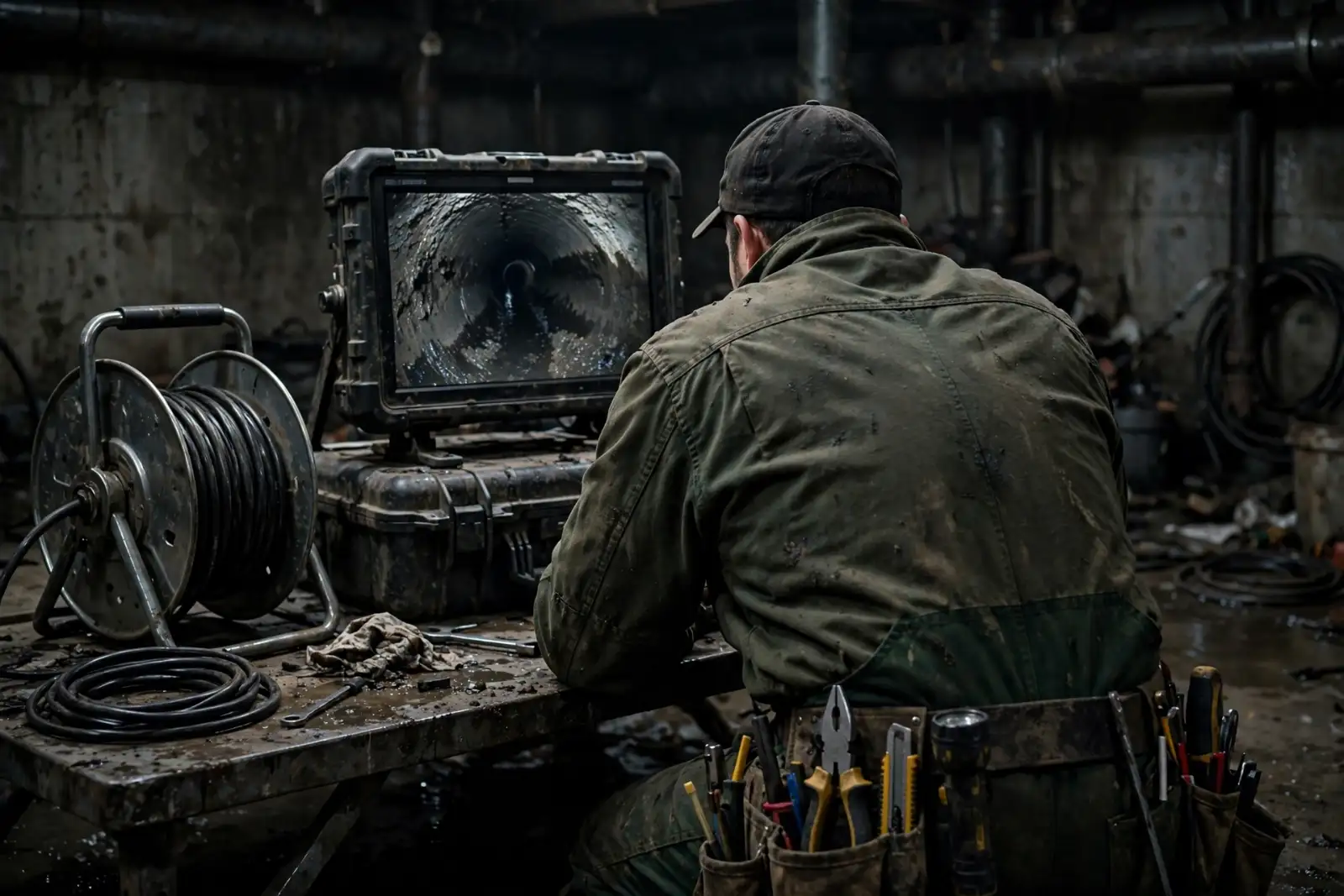
Drain camera inspection in Denver: see inside the pipe before you pay for a fix
Every repeat clog is a question: is the line blocked again, or is something wrong with the pipe? Drain camera inspection in Denver answers it directly. A waterproof camera on a flexible rod travels the line while you watch the live picture, showing roots at the joints, bellies holding water, offsets where sections shifted, and buildup narrowing the pipe.
The inspection does not fix anything by itself. Its value is making every dollar after it count: the right clearing method, aimed at the right spot, with no guesswork. This page explains when a camera makes sense, what the video reveals, and how the problem gets located. Call (223) 318-0314 to schedule a look inside your line.
When a drain camera inspection in Denver makes sense
The clearest case is the repeat clog. One backup is bad luck; the second backup in the same line is information, and the camera reads it. If cabling keeps pulling back roots or heavy scale, the video shows where they come from and how bad the pipe is, which decides whether the answer is jetting, scheduled cutting or a repair referral.
The second case is before a big decision. Jetting a line without knowing its condition risks damaging fragile pipe, so the camera goes first on every jetting visit. And when a line has never been seen and the house is changing hands, an inspection tells the buyer what the drains actually look like instead of what everyone hopes.
A camera also makes sense when the symptom does not match the fixture. Water appearing far from where it should, or a clog with no clear cause, usually means the problem is in a section of pipe nobody has looked at yet. Floor drains that back up again and again are a common reason to look; see floor drain cleaning for those lines.
And if sewage is on the floor right now, do not wait for an inspection. That is an emergency drain cleaning situation: stop using water and call immediately.
What a video pipe inspection can show
Roots show as pale fibers entering at the joints, growing into masses that catch everything the line carries. Bellies show as sections where water sits instead of flowing, with debris settling in the sag. Offsets show as a visible step where one pipe section has shifted against the next, and cracks show as dark lines that let soil and roots in.
Buildup has its own look: grease coats the walls in smooth yellowish layers, while scale crusts old metal pipe in rough ridges. Each one reads differently on the monitor, and each one points to a different fix. That is the whole point of looking: the treatment follows the diagnosis.
The tech narrates what you are seeing as the camera travels. You do not need to read the picture yourself; the explanation comes with the video, in plain language, while it is on the screen.
How a drain line camera finds the exact problem spot
Seeing the problem is half the job; knowing where it is under the yard is the other half. The camera head carries a transmitter, and the tech walks the surface above with a locator that beeps over the signal. That marks the spot on the ground within inches and reads out the depth.
Location matters because it decides everything downstream. A root intrusion ten feet from the cleanout is a different job than one under the driveway, and a belly under the lawn gets a different recommendation than a belly under the foundation. Without the locator, every fix starts with exploratory digging or guesswork.
The located spot gets marked and measured from fixed points, like the corner of the house, so the information survives the visit. If a repair contractor ever needs it, the map is already made.
Repeat clogs: why pros inspect after the second backup
This site's signature message applies double to camera work: clearing a drain and finding why it keeps clogging are different jobs. The first clearing is reasonable without a camera. The second clearing of the same line without looking inside is where money starts getting wasted, because the cause is still in the pipe, unseen.
A sewer camera inspection after the second backup changes the conversation from what is blocking the line to what is wrong with the line. Roots at every joint, a belly under the yard, or a cracked section each carry their own plan, and none of them is another blind clearing.
The inspection can prevent the third, fourth and fifth clearing of a line that was never going to stay open. It is the one visit that actually moves the problem forward instead of repeating it.
Buying a home in Denver? Inspect the drain first
Denver Borough's older homes often have original laterals, and a standard home inspection does not look inside them. A drain camera inspection before closing shows the buyer exactly what the building drain looks like: roots, offsets, bellies or a clean bill of health. It is the only way to know what you are buying underground.
Sellers rarely know the condition of their own lateral, so this is not about blame. It is about walking into the purchase with the full picture instead of discovering the main line's condition with the first backup. The video and the located problem spots become part of your file on the house.
Schedule it during the inspection window, and make sure the tech can access a cleanout. The tech explains what the footage shows before recommending any next step.
Denver homes and camera inspections
Denver Borough is where the camera earns its keep most often. Original clay and cast iron laterals under older borough homes have lived through decades of root growth and ground movement, and the video usually shows exactly that: roots at the joints, the occasional offset, scale in the cast iron. For the borough's older housing stock, drain cleaning in Denver Borough covers these homes and their original lines.
In the township subdivisions, inspections tend to reveal buildup rather than breaks: grease-coated kitchen runs, scale in long branch lines, the occasional belly where a trench settled. Those findings point to jetting or scheduled clearing rather than repair, which is useful news. Along the main road, drain cleaning in Reamstown serves the mixed-era homes where either pattern can appear.
Wherever the house sits, the principle holds: look before you spend. A camera visit helps avoid the wrong fix, and it is the only visit that shows you the pipe instead of guessing at it.
Repeat clog with no clear cause? Describe the history on the call and the pro you are connected with can bring the camera.
Describe the problem, we will dispatchWhat the camera finds, and what it means for the fix
Each finding on the monitor points to a different plan. This is how a tech reads them.
| Finding | What it looks like | What it means |
|---|---|---|
| Roots | Pale fibers entering at the joints | Cut by cabling; camera maps the joints for next time |
| Belly | Section where water sits instead of flowing | Debris settles here; clearing helps, the sag remains |
| Offset joint | Visible step between pipe sections | Catches waste; clearing is temporary by nature |
| Crack or break | Dark line or hole in the pipe wall | Clearing cannot fix this; a repair contractor is the next call |
| Grease or scale buildup | Coating narrowing the pipe walls | Jetting scours it clean after cabling opens the line |
While you wait: camera inspection
- Note the clog history: when it started and what the last visit found.
- Clear a path to the cleanout so the camera can go in.
- Stop using the affected fixtures so the line is visible on camera.
- Skip chemical drain cleaner before the camera goes in; it can harm pipes and the technician.
- If you are buying the home, schedule within the inspection window.
Drain camera inspection in Denver before the next guess
Stop paying for blind clearings of the same line. Call and see what is actually in the pipe.
Ask about same-day availabilityFrequently asked questions about drain camera inspection
The live inside of your drain line: roots entering at joints, bellies where water sits, offsets where sections shifted, cracks in the pipe wall, and grease or scale coating the interior. The tech narrates the picture as the camera travels, so you see the problem yourself instead of taking anyone's word for it.
Yes. The inspection happens on a monitor you can watch, and the tech explains what you are seeing in plain language as it appears. The findings, including located problem spots, are documented so you have a record of the line's condition after the visit.
Yes. The camera head carries a transmitter, and a locator above ground pinpoints the spot within inches and reads the depth. That matters because it decides the fix: a problem ten feet from the cleanout is a different job than one under the driveway, and guessing the location wastes the repair.
In Denver's older homes, absolutely. Original laterals do not appear in a standard home inspection, and the camera is the only way to see roots, offsets or bellies before you own them. It can reveal a broken lateral before you inherit it, and the video becomes part of your file on the house.
It depends on the length of the line, the access point and what the camera finds. The tech can tell you more once they see the setup. What matters more than the clock is that the full run gets seen and the problem spots get located, not rushed past.
Sometimes. If there is no cleanout, the tech can pull a toilet to access the line and run the camera from there. It depends on the layout of your plumbing. Mention the access situation on the call so the visit is planned with the right approach.
You get an honest read: what is damaged, where it is, and what it means. Clearing cannot fix a broken or collapsed pipe, and we will tell you that plainly. Sewer line excavation and replacement is outside this service; a sewer line contractor handles that work, and we can point you toward one.
Often, yes. The camera needs to see the pipe walls, and a fully blocked line shows nothing but the blockage. The usual sequence is to cable the line open first, then run the camera to see what caused it. That order, open then look, is standard because it actually works.
Same line clogging again? Talk to a drain cleaning pro now.
Get a drain camera inspection in Denver that answers the question
Another blind clearing of the same line is money spent on a guess. A drain camera inspection in Denver shows the pipe, locates the problem and aims the fix, so the next dollar you spend is the right one. Call (223) 318-0314 and schedule a look inside your line today.
Get Denver help today