Hydro Jetting in Denver, PA
Some clogs need more than a cable through the middle. Hydro jetting in Denver uses high-pressure water to scour grease, scale and root buildup off the pipe walls. Call and a local pro will tell you honestly if jetting fits your line.
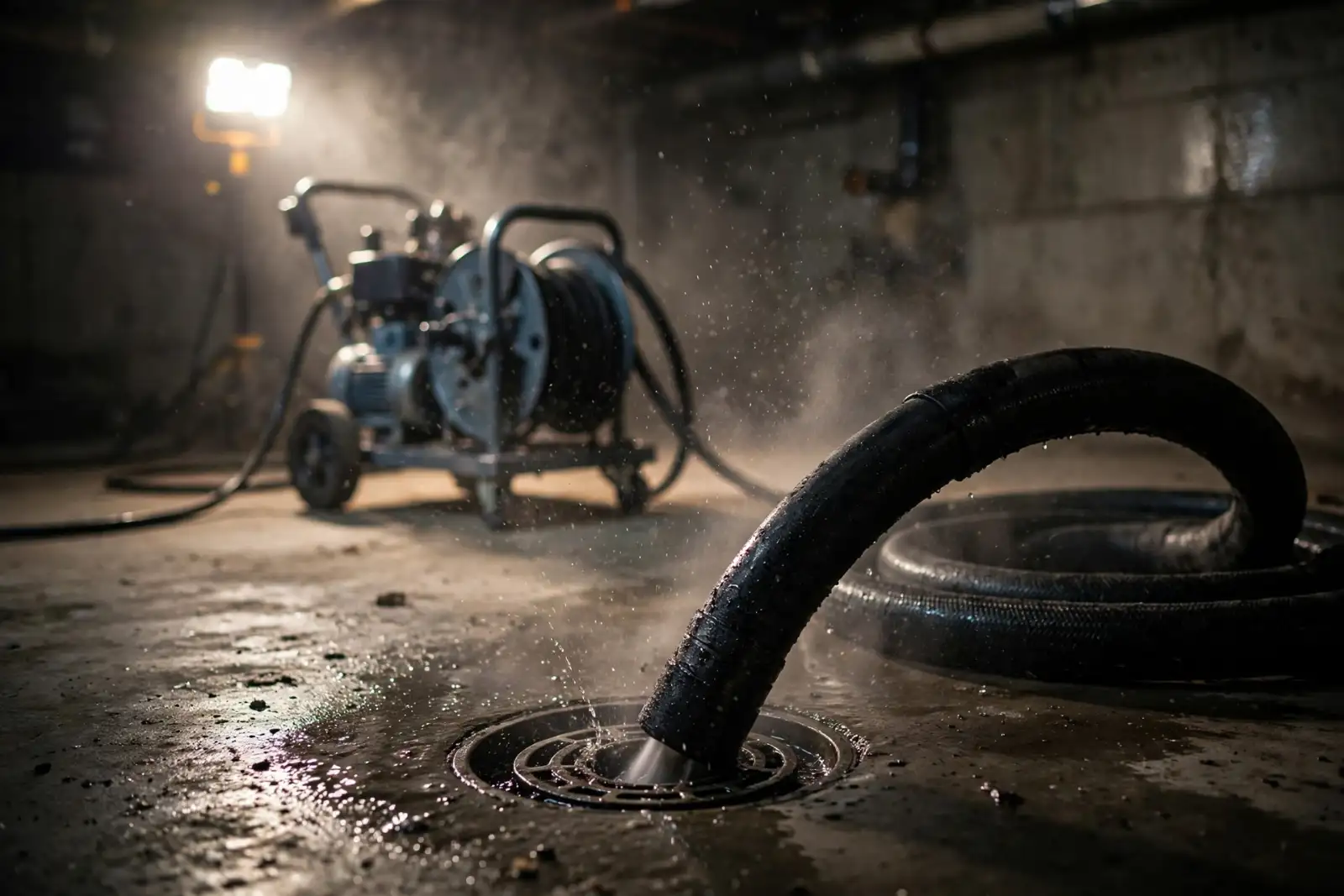
Hydro jetting in Denver: high-pressure water that scours the line clean
A cable punches a hole through a clog. Hydro jetting cleans the pipe. A specialized nozzle sends water forward and backward at high pressure as it travels the line, peeling grease off the walls, flushing out scale and cutting through root masses, then carrying the debris downstream and out. Hydro jetting in Denver is the answer when a line keeps clogging because the walls themselves are coated, not just blocked at one spot.
It is also a tool with limits, and an honest pro leads with them. Jetting is not for every pipe, which is why a camera check comes first on every jetting visit. This page explains what jetting does, how it compares to cabling, and when the right answer is something else. Call (223) 318-0314 to talk through your line with a local tech.
How the jetter works inside the line
The jetter feeds a hose with a precision nozzle into the line through the cleanout. Water jets blast forward to break up the blockage and backward to pull the nozzle along and flush debris back toward the access point. It amounts to water jetting sewer line walls from the inside: the jets peel buildup off and carry it downstream. The tech works the nozzle up and down the affected section until the water runs clear and the line drains at full capacity.
What comes out tells the story: sheets of grease from kitchen lines, gritty scale from old metal pipe, and shredded root masses from joints. Jetting does not just open the pipe, it restores the inside diameter, which is why a jetted line resists the next clog longer than a line that was only cabled through.
Jetting vs cabling: which clog needs which
Cabling and jetting solve different problems. A cable with a cutting head is the right tool for a discrete blockage: a wad of wipes, a root intrusion at one joint, a solid obstruction. It opens a single blockage directly. When the blockage is a single thing in a single spot, cabling wins.
Jetting wins when the problem is the pipe walls themselves. Years of grease coating a kitchen line, scale narrowing an old metal drain, or root fibers spread along several joints are conditions, not blockages, and a cable just pokes a hole through them. Jetting drain cleaning scours the full circumference of the pipe, which is the only way to reset a coated line.
Jetting grease and roots: what builds up in Denver lines
Kitchen branch lines in Denver build grease year after year: every pan rinsed and every disposal load adds a film that hardens into a coating. Jetting grease off the walls is the only clearing method that removes the coating instead of tunneling through it.
Scale is the older-home version: mineral and soap deposits roughen the inside of metal pipe until the line grabs everything that passes. And roots enter at the joints of clay and cast iron laterals, growing into fibrous masses that catch wipes and paper. Jetting cuts the root fibers flush and flushes them out, buying the line real time.
None of these stay fixed by themselves. Grease habits, water chemistry and root growth continue after the visit, which is why the tech tells you what the line looked like and what to watch for, instead of promising it will never clog again.
Basement floor drains and laundry lines build the same coatings from wash water and lint. For those lines, see floor drain cleaning.
When jetting is not the right call
Here is the honest limit: hydro jetting is not safe for every pipe. Fragile, cracked or collapsed pipe can be damaged by high-pressure water, and jetting a line that is already broken turns a clearing visit into a repair situation. Old Orangeburg or badly deteriorated cast iron, bellies holding standing water, and separated joints are all reasons to say no to the jetter.
That is exactly why the camera goes in first. The camera shows the pipe's condition before any pressure is applied, and if the line cannot take jetting, the tech says so and recommends the right alternative, usually cabling or a repair referral. A company that jets without looking first is gambling with your pipe.
Jetting is also overkill for a simple fixture clog. A hair-clogged tub or a single slow sink does not need a jetter; it needs a cable. The right tool for the actual problem beats the impressive one.
Camera first, then jet: the order that works
The sequence matters. First the cable opens the blockage so water moves, then the drain camera inspection shows the pipe's condition and the extent of the buildup, and only then does the jet go in. Each step earns the next one, and skipping the camera means jetting blind.
The camera also sets expectations. If the video shows heavy scale along the whole run, you will know why jetting was recommended and what it should achieve. If it shows a broken section, you will know before anyone spends money on pressure washing a pipe that needs a different fix.
After jetting, the tech runs water and often the camera once more to confirm the walls are clean.
Denver homes and hydro jetting
In Denver Borough, jetting earns its keep on the older lines. Original cast iron and clay laterals collect scale and root fibers along their length, and a borough main that has been cabled twice in two years is a textbook jetting candidate, once the camera confirms the pipe can take it. The drain cleaning in Denver Borough page describes the older homes where jetting often comes up.
The township subdivisions contribute the grease cases: busy kitchens, disposals and dishwashers coating branch lines over twenty or thirty years. A subdivision kitchen line that slows every few months despite good habits is usually coated, not blocked, and that is the distinction jetting exists for. Along the main road, drain cleaning in Reamstown serves the mixed-era homes where both patterns show up.
Rural West Cocalico homes on septic get a clear boundary: jetting is for the drain lines, and anything past the tank is septic work. drain cleaning in West Cocalico Township states that boundary upfront on every visit.
Coated line or single clog? Describe what is happening and a tech will tell you which tool fits.
Get upfront pricing on the phoneCabling vs jetting vs camera: the honest comparison
Three tools, three jobs. A good tech picks based on what the line actually needs.
| Method | What it does | Honest limit |
|---|---|---|
| Cabling | Punches through blockages with a cutting head | Opens a hole; leaves wall coating behind |
| Hydro jetting | Scours the full pipe wall with high-pressure water | Not for fragile or broken pipe; camera first |
| Camera inspection | Shows the inside of the pipe on video | Diagnoses; does not clear anything itself |
| Cable, then jet | Opens the blockage, then cleans the walls | The right sequence for a line with a history |
While you wait: hydro jetting
- Stop using the affected drains so the line is not under water when the tech arrives.
- Keep chemical drain cleaner out of the line before jetting; it can harm pipes and the technician.
- Note how often the line has clogged and what the last visit found.
- Clear a path to the cleanout or the basement access point.
- If several fixtures are backing up, stop using water until the pro arrives.
Camera check first, then the jetter
Coated lines need scouring, not another hole punched through. Call and get an honest read on your pipe.
Check availability in DenverFrequently asked questions about hydro jetting
Not always, and that is why a camera check comes first. Sound older pipe with heavy buildup is a great jetting candidate, but cracked, collapsed or badly deteriorated pipe can be damaged by high-pressure water. The camera shows the pipe's condition before any pressure is applied, and an honest tech will refuse to jet a line that cannot take it.
Jetting cuts root fibers flush with the pipe wall and flushes the mass out, which restores flow and buys the line real time. It does not stop roots from growing back into the joints, so a line with heavy root intrusion will need attention again down the road. The camera shows exactly where the roots enter, which keeps the plan honest.
That depends on what was coating the line and whether the cause continues. A grease-coated kitchen line stays clear as long as grease stays out of the sink; roots grow back on their own schedule. Nobody can promise a jetted line will never clog again. What jetting gives you is a fully clean pipe wall, which is the cleanest start a line can get.
They do different jobs. Snaking, or cabling, punches through a discrete blockage. Jetting scours the entire pipe wall clean. For a single solid clog, the cable is the right tool. For a line coated with grease, scale or root fibers, jetting is the only method that resets the pipe itself.
Usually not. The jetter hose needs a cleanout or a main-line access point to enter the line safely and to manage the water. The tech decides the access point after seeing the line on camera. If your home has no cleanout, mention it on the call so the visit is planned correctly.
Less than it sounds. The work happens through the cleanout, the tech controls the water, and the discharge is managed at the access point. You will hear the machine and see water running, but a professional visit does not flood the work area. Clearing a path to the cleanout is the main thing you can do to help.
Because jetting the wrong pipe wastes your money or damages the line. The camera shows whether the pipe is sound enough for high pressure, how far the buildup extends, and whether something structural, like a break or a belly, is the real problem. Camera first is what separates a professional jetting job from a gamble.
There is no fixed schedule. Jet when the line needs it: repeat clogs from wall coating, heavy scale the camera reveals, or root fibers along a run. A line that stays clear does not need jetting on a calendar. The camera and the clog history decide, not a maintenance plan.
Line coated, not just blocked? Talk through your line by phone.
Get hydro jetting in Denver done in the right order
Jetting works when the pipe is sound and the problem is the walls, and the camera proves both before the hose goes in. Jetting in Denver follows the professional sequence: open the line, look inside, then scour it clean. Call (223) 318-0314 and get an honest read on your line today.
Book your drain cleaning visit