Main Drain Line Cleaning in Denver, PA
When several fixtures back up at once, the problem is past any single drain. Main drain line cleaning in Denver clears the main building drain through the cleanout and finds what keeps blocking it. Call and a local pro takes it from there.
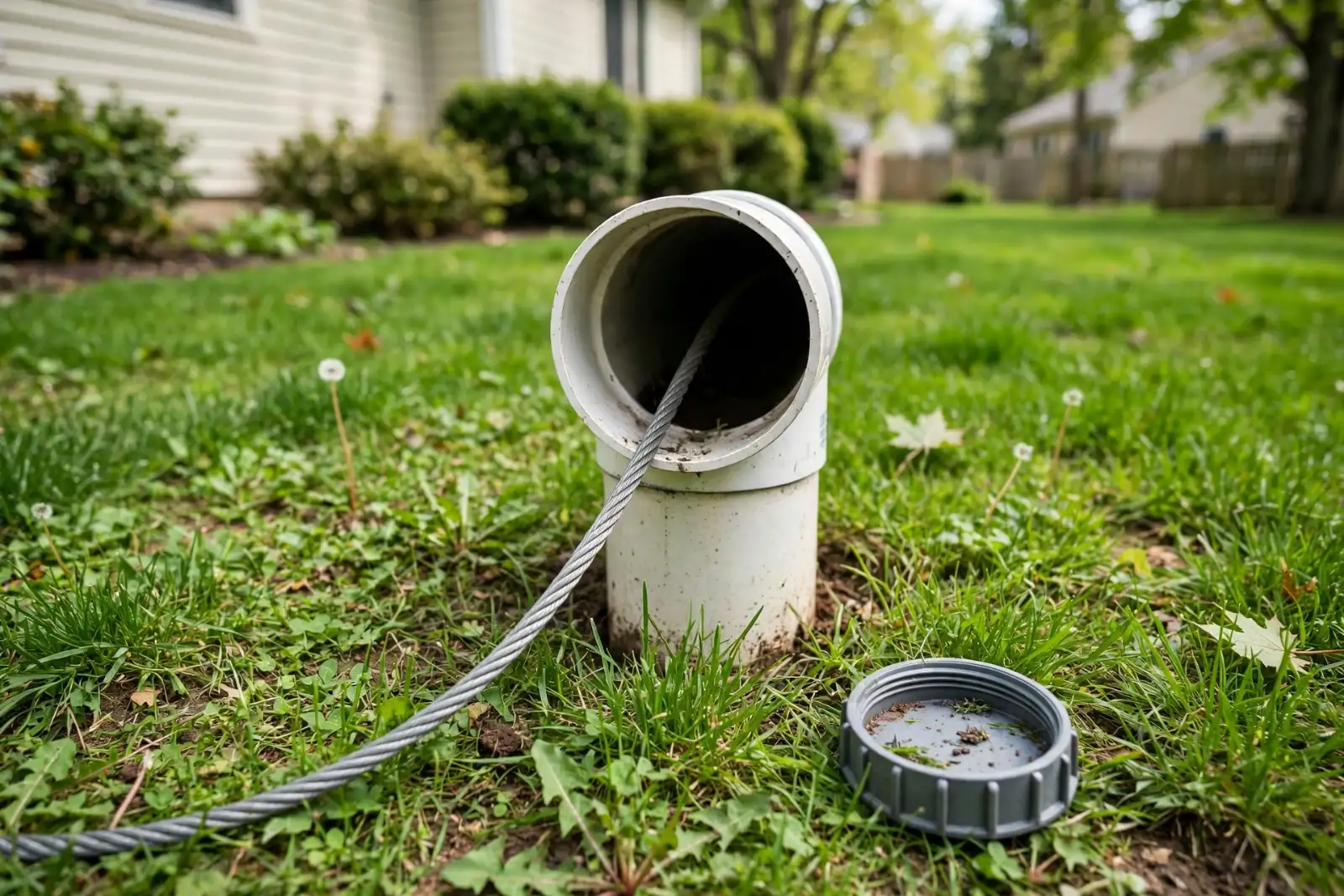
Main drain line cleaning in Denver when several fixtures back up at once
One slow sink is a fixture problem. The tub, toilet and basement floor drain acting up together is a main-line problem: backups show at the lowest fixtures first, gurgling travels between drains, and plunging one fixture pushes water out of another. Clearing the main line addresses the single pipe every drain in the house shares, from the house to the cleanout.
This page explains how to tell a main-line clog from a fixture clog, where Denver techs find the cleanout, and when a camera look is the honest next step. If sewage is backing up right now, stop using water and call (223) 318-0314.
Signs the main line is the problem
The main line announces itself through patterns, not single events. Several fixtures backing up or draining slowly at the same time is the clearest sign. Water coming up in the tub or shower when the toilet flushes, or in the basement floor drain when the washer runs, means the blockage is downstream of all of them, in the pipe they share.
Gurgling is the other tell: when one fixture drains and another gurgles, air is being forced through trap water because the normal path is restricted. A sewage smell from the floor drain that comes and goes rounds out the picture.
Multiple drains backing up at once is the symptom Denver techs take most seriously, because it means the main building drain is likely restricted. Call promptly; same-day and emergency dispatch are available where possible.
The cleanout: where it usually sits at Denver homes
The cleanout is the capped pipe that gives the tech direct access to the main drain, and finding it fast saves time on every main-line visit. In Denver homes it is most often in the basement, a capped pipe sticking out of the floor or the wall where the main drain leaves the house. Some homes have it outside, a capped pipe near the foundation in the yard.
If you know where yours is, clear a path to it before the tech arrives and mention its location on the call. If you do not have a cleanout, or cannot find it, say so on the call. The tech has other access points, including pulling a toilet to reach the line, and knowing in advance means the right plan from the start.
Never open a cleanout cap yourself when the line is backed up: a blocked main line holds pressure and can release backed-up water. Leave the cap for the tech.
How cabling clears a main sewer line clog
Main-line cabling runs a heavy steel cable with a cutting head through the cleanout and down the building drain. The head chews through the blockage, roots, grease masses, flushed wipes, whatever is in there, and the cable is worked back and forth until water flows freely. Then the tech runs water from several fixtures to confirm the whole line drains, not just one branch.
This is professional equipment for a reason: a main-line cable is long, heavy and powerful, and it takes experience to run it without damaging the pipe at turns and joints. Do not attempt to snake a main line yourself.
Cabling clears the blockage; it does not change what caused it. Roots grow back, grease re-coats, and flushed wipes collect again. The tech should tell you what came out of the line, because that tells you what happens next. That full process, open the line, cut the blockage, flush it and confirm flow, is what main line drain cleaning means in practice.
Tree roots and older pipe: Denver's repeat-clog culprits
Older Denver homes often have clay or cast iron building drains, and mature trees send fine roots into the joints. The roots grow into a mass that catches everything the line carries, which is why a main line clogs, gets cleared, and clogs again the next season.
Cabling cuts the root mass out through the cleanout without digging, and for many homes that is the right ongoing answer. But roots are a cause, not a one-time event: they grow back. When the same line needs cutting every year, a camera inspection shows exactly where the roots enter and how bad the joints are.
If the pipe itself is broken or collapsed, that is a different job. Sewer line excavation and replacement is outside what this service covers; a sewer line contractor handles that work. Drain pros clear lines; excavation contractors dig them up.
When a drain camera inspection is the next step
Clearing answers what is blocking the line today; a camera answers why it keeps happening. After a second main-line backup, the honest next step is to look inside the pipe rather than clearing it a third time blind.
The camera shows roots at the joints, bellies where water sits, offsets where sections have shifted, and cracks that let soil in. Each one points to a different plan, and guessing without the picture wastes money on the wrong fix. drain camera inspection walks through exactly what the video reveals.
For lines narrowed by grease and scale rather than roots, hydro jetting can scour the pipe walls clean after cabling opens the blockage. Cable first to open it, camera to see it, jet to clean it: that is the order that works.
Denver homes and main-line trouble
Denver Borough's older homes carry the classic main-line risk profile: original clay or cast iron laterals, mature trees in the yards, and decades of root growth at the joints. Borough main lines clog from roots more than anything else, and the basement floor drain is usually the first place the backup shows. For these older homes and their original laterals, drain cleaning in Denver Borough covers the borough's housing stock.
The newer subdivisions in the townships have newer pipe but their own pattern: finished basements with bathrooms and laundry below the rest of the house, which makes the basement the lowest fixture and the first to back up. Grease from busy kitchens and flushed wipes are the usual culprits here rather than roots. drain cleaning in East Cocalico Township reaches main lines in the subdivisions around the borough.
Out in West Cocalico, rural homes on septic get a clear boundary: this service clears the drain to the tank, and the tank itself is septic work. drain cleaning in West Cocalico Township states that boundary upfront.
Several fixtures acting up? Describe the pattern and a tech will tell you if it is the main line.
Get a straight answer by phoneOne fixture or the main line: how to tell
Run this check before you call. It decides whether you need a fixture clearing or a main-line visit.
| Symptom | One fixture | Main line |
|---|---|---|
| Slow drain | A single sink or tub drains slowly | Several fixtures slow at the same time |
| Backup location | Water stays at the one fixture | Water appears at the lowest fixture, often the floor drain |
| Gurgling | No gurgling elsewhere | One fixture drains, another gurgles |
| Toilet test | Toilet flushes normally | Flushing pushes water up in the tub or shower |
| Washer test | Washer drains fine | Washer draining backs water into a nearby fixture |
While you wait: main line cleaning
- Stop using water in the house if more than one fixture is backing up.
- Do not pour chemical drain cleaner; it can harm pipes and the technician.
- Keep children and pets clear of any water that has backed up.
- Move valuables away from the basement floor drain.
- Note which fixtures are affected and when it started; it speeds diagnosis.
Clear the main line before the next backup
A main-line clog does not clear itself. Call and get the line opened and checked.
Check availability in DenverFrequently asked questions about main drain line cleaning
Look for the pattern: several fixtures backing up or draining slowly at the same time, water appearing at the lowest fixture first, and gurgling in one drain when another is used. A single slow sink is a fixture clog. The whole house acting up together is the main line.
Most often in the basement, a capped pipe in the floor or the wall where the main drain leaves the house. Some homes have it outside near the foundation. If you know where yours is, clear a path to it and mention it on the call. If you cannot find one, say so; the tech has other ways in.
The tech works from another access point, most commonly by pulling a toilet to reach the line, or from an interior cleanout if one exists. Tell the dispatcher there is no cleanout so the tech arrives with the right plan. It adds time to the visit but it does not prevent the clearing.
Yes. Cabling cuts the root mass out through the cleanout, no digging involved, and that is the right answer for many homes. Roots grow back, though, so a line with heavy root intrusion may need cutting on a schedule. Digging only enters the picture if the pipe itself is broken or collapsed, which is a different job.
It is the lowest opening in the drainage system. When the main line restricts, backed-up water takes the lowest exit it can find, and in most Denver homes that is the basement floor drain. A floor drain backing up while upstairs fixtures still work is one of the clearest main-line signs there is.
Clearing restores full flow today. Whether it stays that way depends on the cause: roots grow back, grease re-coats, and flushed wipes collect again. Nobody can promise a main line will never clog again. What the visit should give you is a clear line and an honest read on what came out of it.
Treat it as urgent. Backed-up sewage in the house will not wait, and every flush or load of laundry adds to it. Stop using water, keep children and pets away from the backed-up water, and call. Calls are answered 24/7, with same-day and emergency dispatch where available.
Yes, if more than one fixture is backing up. Every gallon you send down has nowhere to go and will come back up at the lowest fixture. Stop the washer, skip the showers, and hold off on flushing until the tech has the line open. One slow sink is different; a multi-fixture backup means stop everything.
Several fixtures backing up right now? Call before it gets worse.
Get a main-line clearing that finds the cause
A main-line clog affects every drain in the house, and guessing at it wastes the visit. Main drain line cleaning in Denver opens the line through the cleanout, confirms real flow, and tells you what was blocking it. Call (223) 318-0314 and ask a local pro about your main line.
Call now, fix it today